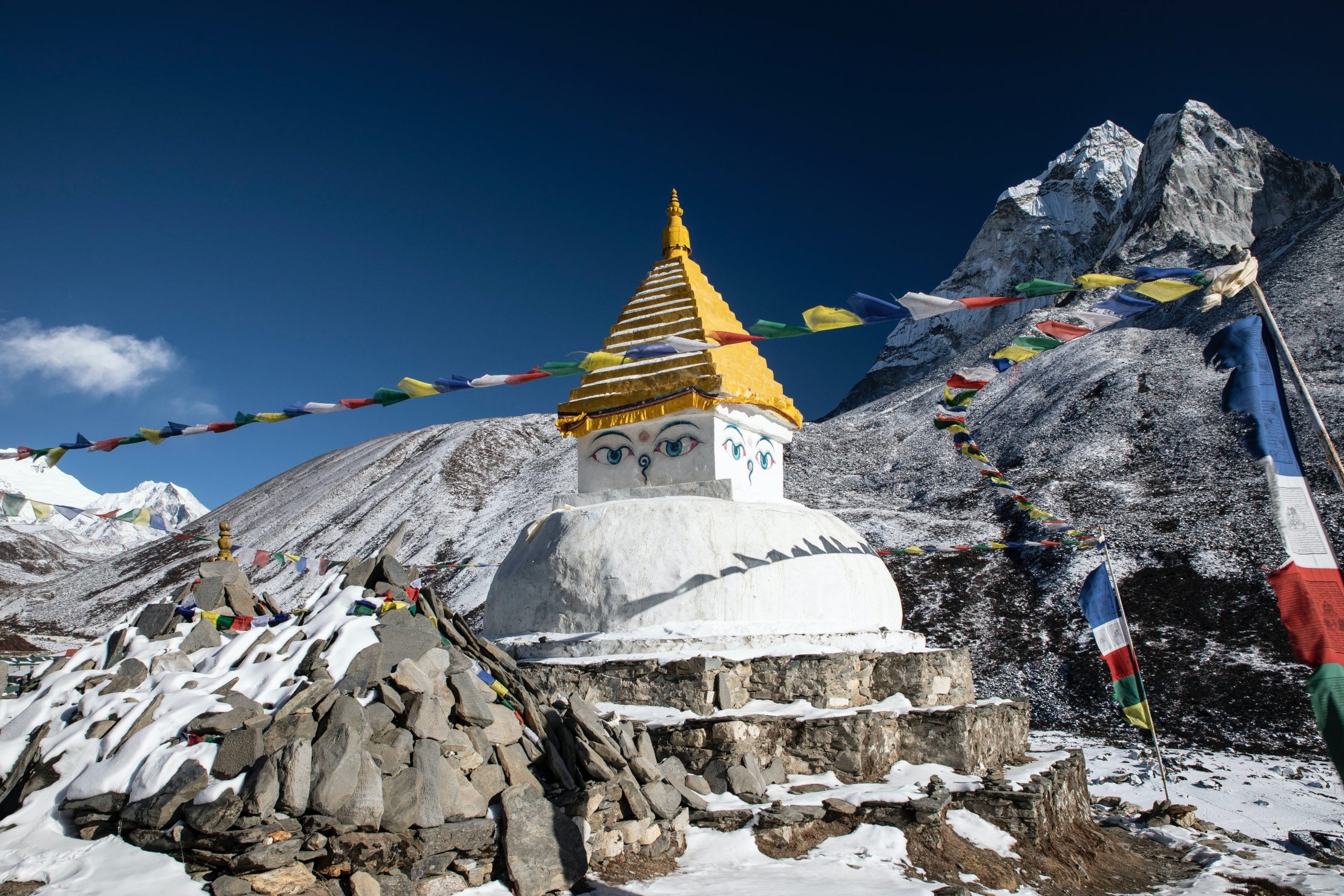
Join our fixed departure treks.
Plan Nepal Trek & Expedition
Share: Print

Everest Panorama Trek

10
Days
9
Nights
From US$ 1,200
US$ 1,099
Save
US$ 101
Group Discounts Available
  • 1 - 1 pax
    US$ 1,200
  • 2 - 5 pax
    US$ 1,099
  • 6 - 12 pax
    US$ 1,075
  • 13 - 20 pax
    US$ 1,060

Need help with booking? Send us a message.

Destination
Nepal
Activities
Trekking in Nepal
Group size
Min 2
Max. elevation
3790 m / 12434 ft
Difficulty
Moderate
Best season
February -June and Sept-Dec
Starts and ends
Kathmandu / Kathmandu
Transportation
All ground transportation and domestic flight as per itinerary
Accommodation
3*** Hotel in Kathmandu and teahouse / Lodge during the trek
Meals
Breakfast in Kathmandu and all meals during the trek
Trip route
Kathmandu-Lukla-Namche-Khumjung Sherpa Village-Phakdim-Namche-Lukla-Kathmandu

Highlights

  • Panoramic views of Mt. Everest, Lhotse, Ama Dablam, Thamserku & more
  • Visit to vibrant Sherpa capital Namche Bazaar
  • Exploration of Tengboche Monastery, the spiritual heart of the Khumbu region
  • Hike to Everest View Hotel – one of the highest hotels in the world
  • Cultural immersion in traditional Sherpa villages like Khumjung
  • Excellent photography opportunities of Himalayan landscapes
  • Walk through lush forests of rhododendron and pine
  • Rich encounters with Sherpa culture, Buddhist shrines, and prayer flags

Overview

The Everest Panorama Trek, offered by Plan Nepal Trek & Expedition, is a carefully crafted journey designed for trekkers who wish to experience the beauty and grandeur of the Everest region without the physical demands of reaching Everest Base Camp. This trek is ideal for those seeking a short yet rewarding Himalayan adventure. Over the span of 10 days, travelers explore the heartland of the Sherpas, delving deep into the unique cultural and natural landscapes of the Khumbu region. The trek offers unforgettable vistas of towering snow-capped peaks, including Mt. Everest (8,848m), Lhotse, Ama Dablam, Thamserku, and other majestic Himalayan giants.

This moderate-level trek includes visits to iconic locations such as Namche Bazaar, the vibrant Sherpa town and gateway to Everest; Tengboche, home to the revered Tengboche Monastery; and Khumjung, a picturesque village with deep cultural roots. The trek follows a well-established route, providing excellent acclimatization opportunities and allowing for a relaxed pace. Along the way, trekkers witness a rich blend of natural beauty and spiritual heritage, encountering Buddhist stupas, prayer flags, chortens, and traditional Sherpa villages. Whether you're a first-time visitor to Nepal or a returning traveler, the Everest Panorama Trek delivers a balanced experience of adventure, culture, and nature in just over a week. With Plan Nepal Trek & Expedition, you’ll be guided by experienced local professionals who ensure both safety and an authentic immersion into the Sherpa lifestyle.

Best Time for Everest Panorama Trekking

The best seasons for the Everest Panorama Trek are spring (March to May) and autumn (September to November). These periods offer stable weather conditions, clear skies, and moderate temperatures—ideal for trekking. In spring, the trails are decorated with blooming rhododendrons, and the air carries a fresh alpine scent. The visibility during this time is excellent, making it perfect for photographing the Himalayan peaks. You can expect daytime temperatures ranging from 10°C to 15°C at lower elevations, with cooler nights as you gain altitude.

Autumn, particularly October and early November, is equally popular due to its post-monsoon clarity and dry conditions. The skies remain clear throughout the day, providing sweeping views of mountains like Ama Dablam, Everest, and Lhotse. The temperature is slightly cooler than spring but still comfortable for walking. While winter treks (December to February) are also possible, they require additional preparation for cold weather, and some lodges may be closed due to snow. Summer (June to August), dominated by the monsoon, is not recommended due to slippery trails, leeches, and cloud-obstructed views. Therefore, if you're looking for the optimal experience with the best scenery and manageable trekking conditions, spring and autumn are the ideal windows for embarking on the Everest Panorama Trek with Plan Nepal Trek & Expedition.

Everest Panorama Trekking Difficulty

The Everest Panorama Trek is considered moderate in difficulty, making it suitable for trekkers with average fitness levels, including beginners who are reasonably active. Unlike the Everest Base Camp trek, this journey avoids the higher altitudes of 5,000 meters and instead reaches a maximum elevation of Tengboche (3,870m). The trekking days involve 4–6 hours of walking per day, often on well-maintained trails that include stone staircases, suspension bridges, and gradual ascents and descents. While the physical challenge is real, it is not extreme, and there are sufficient rest stops and acclimatization days built into the itinerary to support your adjustment to altitude.

Acclimatization is a crucial aspect of high-altitude trekking, and this itinerary includes a full acclimatization day at Namche Bazaar, which significantly reduces the risk of altitude sickness. Despite the moderate grade, the trek does require mental preparedness and stamina, particularly during uphill climbs and long walking days. It's recommended that trekkers engage in some form of pre-trek physical conditioning, such as hiking, walking, or cardiovascular workouts, several weeks in advance. With expert guidance from Plan Nepal Trek & Expedition, trekkers are supported every step of the way, ensuring safety and comfort even for first-time Himalayan explorers.

Food and Accommodation for Everest Panorama Trek

Throughout the Everest Panorama Trek, you’ll stay in cozy teahouses or mountain lodges, which offer basic yet comfortable amenities. These teahouses provide private or twin-sharing rooms, usually with shared bathrooms, though some may offer private bathrooms for an extra fee. Blankets are provided, but it’s advisable to bring your own sleeping bag for added warmth. Most lodges are family-run, and staying in them gives trekkers a close-up experience of Sherpa hospitality and daily life.

Meals on the trail are typically served in communal dining halls around a central stove. The food is nutritious, filling, and includes a variety of Nepali and international dishes. The staple Nepali meal, dal bhat (rice, lentils, and vegetables), is a common and satisfying choice, often served with refills. Other options include noodles, fried rice, pasta, pancakes, eggs, Tibetan bread, and soups. Beverages like tea, coffee, and hot lemon are widely available. Drinking water can be purchased at lodges or refilled with filtered or boiled water (or using purification tablets). With Plan Nepal Trek & Expedition, you can expect well-managed lodging arrangements and meals that cater to your dietary needs while ensuring hygiene and safety throughout the journey.

Why Choose Everest Panorama Trek

The Everest Panorama Trek is perfect for those looking to experience the magic of the Everest region without undertaking an exhaustive expedition. It offers a rich tapestry of Himalayan culture, natural beauty, and mountain vistas within a relatively short time frame. For travelers with time constraints or those concerned about the challenges of higher altitudes, this trek is a fantastic alternative to the full Everest Base Camp trek. You’ll still witness iconic peaks like Everest, Ama Dablam, and Thamserku, and visit culturally significant places like Tengboche Monastery and Namche Bazaar, providing both scenic and spiritual rewards.

Choosing Plan Nepal Trek & Expedition means opting for professionalism, safety, and authenticity. With years of experience in the trekking industry, the company prioritizes responsible tourism, local community engagement, and high-quality service. Their knowledgeable guides, many of whom are from the Everest region themselves, enrich your trek with insights into Sherpa culture, Buddhist traditions, and mountain ecology. Additionally, the company ensures that all necessary permits, flights, logistics, and accommodation are handled efficiently. For a safe, culturally immersive, and visually breathtaking adventure, the Everest Panorama Trek with Plan Nepal Trek & Expedition stands out as one of the best trekking experiences in Nepal.
Trip Itinerary

Upon arrival at Tribhuvan International Airport in Kathmandu, a representative from Plan Nepal Trek & Expedition will be there to welcome you with a traditional Nepali greeting. You will be transferred to your hotel in the heart of the city, where you can rest after your flight or take a leisurely walk through the bustling streets of Thamel. Depending on your arrival time, a short pre-trek briefing may be organized in the evening, where you’ll meet your guide and receive essential information about the days ahead. Kathmandu is rich in culture, with ancient temples, vibrant markets, and warm hospitality, giving you a first taste of Nepal’s unique charm. You’ll spend the night at a comfortable hotel in Kathmandu, preparing for your mountain adventure the next day.
Your journey begins early with a scenic flight from Kathmandu to Lukla, the gateway to the Everest region. This short yet exhilarating flight offers your first views of snow-capped Himalayan giants. After landing at the Lukla airstrip, you’ll begin your trek with a gradual descent through alpine forests and traditional Sherpa villages. Passing through Chheplung and Ghat, you’ll reach Phakding, a charming village beside the Dudh Koshi River. After a short rest and lunch, the trail continues through pine forests and suspension bridges towards Monjo, where you'll enter the Sagarmatha National Park and present your trekking permits. The final stretch involves a steep climb through forested trails with glimpses of Everest in the distance before reaching Namche Bazaar. Namche is the bustling heart of the Khumbu region, where you’ll find bakeries, gear shops, and a vibrant Sherpa culture. You'll settle in for the night at a comfortable lodge.
Today is set aside for acclimatization to help your body adjust to the increasing altitude. Instead of a rest day, a short acclimatization hike is recommended to maintain fitness and enhance adaptation. A popular choice is a hike to the Everest View Hotel, located at 3,880 meters. This spot offers spectacular panoramic views of Everest, Lhotse, Ama Dablam, and other majestic peaks. Alternatively, a trek to Khumjung village allows you to explore a more traditional Sherpa settlement and visit the Hillary School and Khumjung Monastery, which reportedly houses a Yeti scalp. After returning to Namche, you’ll have the afternoon free to explore the town’s shops, visit the Sherpa Culture Museum, or enjoy a coffee with a mountain view. This acclimatization day is vital for a safe and enjoyable trek, and Namche is the perfect place to rest while still being active. Overnight stay at a cozy teahouse in Namche.
After a nourishing breakfast, your trek continues with a pleasant trail contouring along the mountainside, offering sweeping views of Everest, Nuptse, Lhotse, and the beautifully pointed Ama Dablam. The trail dips down through lush rhododendron forests to the Dudh Koshi River before ascending steadily to Tengboche. This portion of the trek is both scenic and spiritually rich, as Tengboche is home to the famous Tengboche Monastery, the largest in the Khumbu region. Set against a stunning backdrop of Himalayan peaks, the monastery is a sacred site for Sherpas and offers a unique opportunity to witness daily Buddhist rituals. If your timing is right, you may be able to observe monks chanting during prayer ceremonies. The area is also rich in wildlife, and you might spot Himalayan tahr, musk deer, or colorful pheasants. After a fulfilling day, you’ll enjoy a warm meal and an overnight stay in a teahouse in Tengboche.
Today’s trail leads you through serene forests of rhododendron and fir as you descend from Tengboche and then gently ascend toward the peaceful village of Khumjung. This day allows for a more relaxed pace and an intimate experience of Sherpa culture. Khumjung is one of the largest villages in the Khumbu region and remains a hidden gem, less frequented by large trekking groups. A visit to the Khumjung Monastery reveals local religious traditions and the famed "Yeti scalp" that draws curious travelers. You’ll also have the chance to visit the Edmund Hillary School, established by the legendary climber as part of his philanthropic work in the region. Surrounded by dramatic mountain scenery, Khumjung offers a unique window into the traditional Sherpa lifestyle. The peacefulness of this village, with stone houses and yak pastures, contrasts with the busier Namche, making it a memorable stop. Enjoy a hearty meal and restful night in a local lodge.
After breakfast in Khumjung, you’ll begin your return journey, retracing your steps through familiar trails. The descent back to Phakding offers new perspectives of the terrain you previously climbed. The path takes you through the village of Namche Bazaar once more, giving you a chance to shop for souvenirs or grab a fresh pastry from one of the bakeries. As you descend further, the trail becomes gentler, passing through pine forests and crossing several suspension bridges over the Dudh Koshi River. The lower altitude makes breathing easier, and you’ll likely notice a renewed sense of energy. Arriving in Phakding in the afternoon, you can relax by the riverside or explore the village. It’s a peaceful location to reflect on the adventure so far, with the gentle sound of the river and the sight of prayer flags fluttering in the breeze. Overnight in a teahouse in Phakding.
Today marks your final day of trekking. After breakfast, you’ll leave Phakding and begin the gradual ascent back to Lukla. Though the distance is short, the trail includes a few uphill sections that will keep your legs engaged. Along the way, you’ll pass through villages like Ghat and Chheplung, where you can revisit familiar landscapes with a fresh perspective. It’s a great day to reflect on your journey through the Himalayas — the people you met, the towering peaks you saw, and the challenges you overcame. Upon arrival in Lukla, you’ll have the afternoon free to rest or explore the town. You may wish to celebrate your successful trek with your guide and porters, sharing stories and gratitude over a warm meal. This final night in the mountains is often filled with camaraderie and a sense of achievement. Overnight stay in a lodge in Lukla.
After an early breakfast, you’ll head to the Lukla airport for your flight back to Kathmandu. Weather permitting, the short flight offers one last view of the Himalayas before descending into the lush valley of Kathmandu. Upon arrival, a representative from Plan Nepal Trek & Expedition will transfer you to your hotel. The rest of the day is free for relaxation or exploration. You might visit UNESCO World Heritage Sites like Boudhanath Stupa, Pashupatinath Temple, or Patan Durbar Square. Alternatively, wander the streets of Thamel for last-minute shopping, handicrafts, or a spa treatment to ease tired muscles. Enjoy a farewell dinner or try local Newari cuisine in one of the city’s many restaurants. This day offers the perfect blend of reflection and cultural enrichment. Overnight in a hotel in Kathmandu.
Today is a contingency day in case of flight delays from Lukla due to unpredictable mountain weather — a common occurrence. If your flights run smoothly, this becomes a leisure day in Kathmandu. You can use the day to explore more of the city's hidden gems, take a walking tour, or enjoy local art galleries and cafes. Visit the Garden of Dreams for a peaceful retreat or join a half-day cultural tour. This buffer day is a smart inclusion in your itinerary, ensuring that your international departure is not jeopardized by any travel delays. Overnight stay at the same hotel.
Your adventure with Plan Nepal Trek & Expedition comes to an end today. Depending on your flight schedule, our team will arrange airport transfers to ensure you reach Tribhuvan International Airport on time. As you say goodbye to Nepal, you leave with unforgettable memories of towering mountains, warm-hearted Sherpas, and a personal sense of accomplishment. Whether this was your first trek in the Himalayas or one of many, the Everest Panorama Trek offers a perfect mix of cultural connection and natural wonder, leaving a lasting impression. We hope to see you again for more adventures in the future. Safe travels and Namaste!
Not satisfied with this itinerary? Make your own.
Plan My Trip

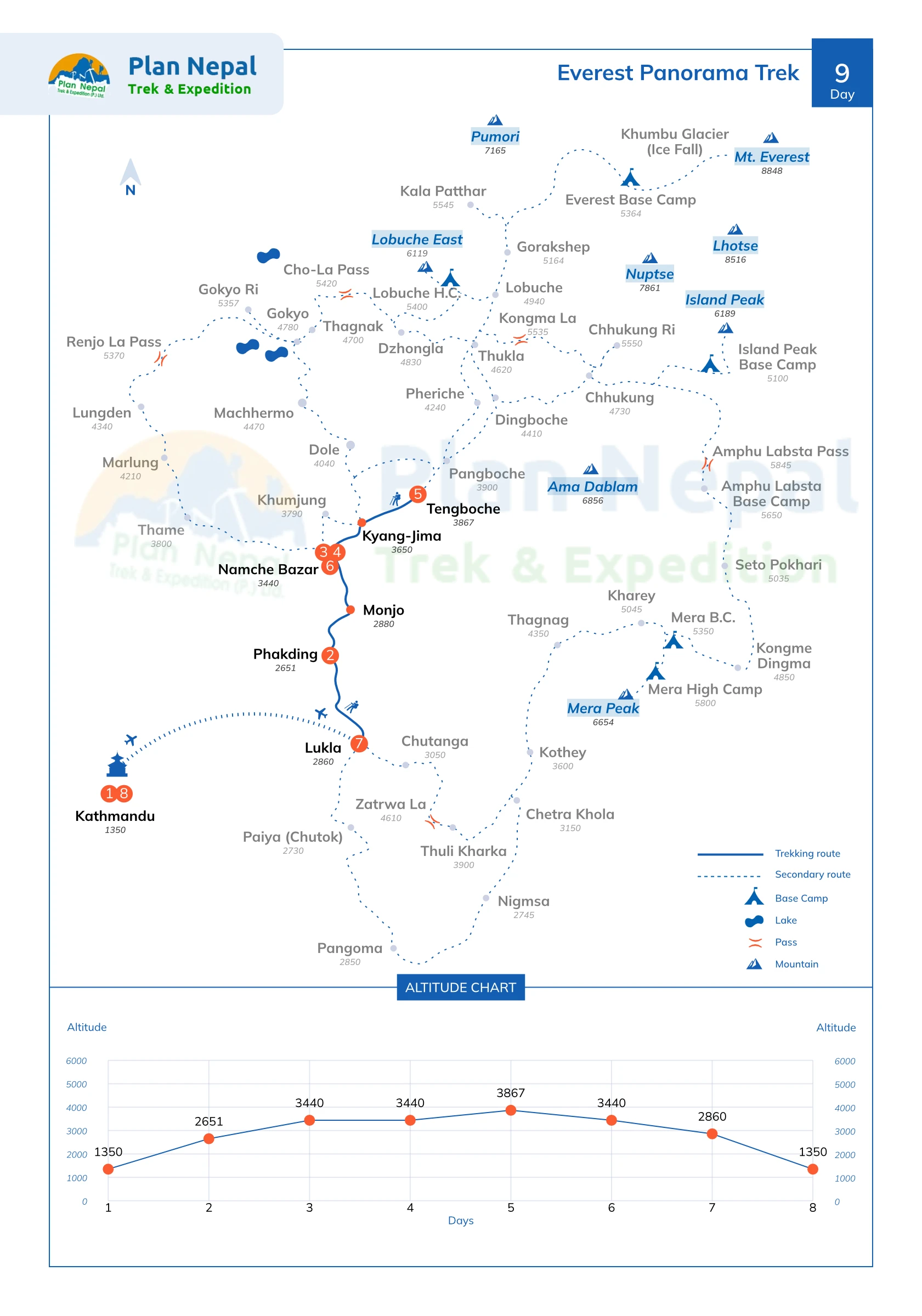
Route Map

Everest Panorama Trek

Includes

  • Airport pick-up and drop off services
  • Accommodation in 3 stars (3***) hotel at Kathmandu
  • Accommodation in teahouses (lodges) during the trek
  • Kathmandu-Lukla-Kathmandu Flight
  • Breakfast in Kathmandu 
  • All meals three times a day (breakfast, lunch and dinner) during the trek
  • All Ground transportation as per itinerary
  • Guides and Porters with their insurance, salary, food, accommodation and equipment
  • Sleeping bags and down jackets if required
  • TIMS and Permit
  • Insurance and equipment's for the guide and porters
  • All applicable government and local taxes per the itinerary
  • First aid kit

Doesn't Include

  • Drinks, beverages, hot shower, etc.
  • Lunch and dinner in Kathmandu
  • Personal nature expenses
  • Tips
  • Travel insurance

Upcoming Departure Dates

Your Start Date is the day you land in Nepal, and your End Date is when you fly home.

If the set Everest Panorama Trek group dates don’t suit your schedule, we can offer alternative dates upon request.

,

Packing List

Proper layering is important to stay warm and comfortable in changing mountain weather.

  • Base layers (thermal tops and bottoms): Keep your body warm in cold mornings and high altitudes.
  • Trekking shirts (quick-dry): Stop sweat buildup and keep you comfortable while hiking.
  • Fleece jacket / mid-layer: Adds warmth between your base layer and outer jacket.
  • Insulated down jacket: Essential for cold evenings and nights at high camps.
  • Waterproof & windproof jacket: Protects you from rain, snow, and strong winds.
  • Trekking pants: One lightweight pair for warm days and one insulated pair for cold sections.
  • Waterproof pants: Handy if the weather suddenly changes.
  • Warm hat/beanie & sun hat: Warmth in the morning and protection from the sun.
  • Buff/neck gaiter: Protects from dust, wind, and cold air.
  • Inner gloves & insulated outer gloves: Keep your hands warm at high altitudes.
  • Warm trekking socks (4–5 pairs): Prevent blisters and keep feet warm.

Good footwear makes trekking easier and safer.

  • Trekking boots (broken-in): Support your ankles and protect your feet on rocky paths.
  • Camp shoes/sandals: Let your feet rest after a long day of walking.
  • Gaiters: Keep snow or mud out of your boots.
  • Microspikes (optional): Useful on icy trails in spring or autumn.
  • Trekking poles: Help your balance and reduce strain on your knees during steep hikes.

The right gear keeps you safe, comfortable, and prepared.

  • Backpack (40–50L) with rain cover: Carry all your daily essentials.
  • Sleeping bag (–15°C to –20°C comfort): Nights can be very cold, especially at high camps.
  • Headlamp with extra batteries: Needed for early morning hikes.
  • Water bottles or hydration bladder (2L): Stay hydrated at high altitudes.
  • Water purification tablets/filter: Safe drinking water is limited in teahouses.
  • Sunglasses (UV400): Protect eyes from strong sun and snow glare.
  • Dry bags/stuff sacks: Keep clothes and electronics dry and organized.
  • Camera/phone + power bank: Charging is limited and may cost extra.

Lightweight but important items keep you clean, healthy, and comfortable.

  • Sunscreen (SPF 50+) & lip balm: Protect from strong sun at high altitude.
  • Personal medications: Bring altitude pills, anti-nausea medicine, and any prescriptions.
  • Basic first aid kit: Blister care is very important on long hikes.
  • Hand sanitizer & wet wipes: Useful when warm water is not available.
  • Quick-dry towel: Small, light, and easy to carry.
  • Moisturizer: Prevents dry skin and chapped lips in cold, dry air.
  • Toothbrush/toothpaste, soap/shampoo: Travel-sized is best.

Keep important items safe and easy to reach.

  • Passport & trekking permits: Needed at checkpoints in the region.
  • Travel insurance: Must cover high-altitude helicopter evacuation.
  • Cash (Nepalese Rupees): For charging, Wi-Fi, hot showers, and small expenses.
  • Snacks/energy bars: Quick energy during long trekking days.
  • Notebook or diary: Record your journey and memories.
  • Lightweight book / Kindle: For reading during downtime in teahouses.
Why Book with Us?
  • Excellent customer service. Our travel experts are ready to help you 24/7.
  • Best price guaranteed.
  • No credit card or booking fees.
  • 100% financial protection.
  • Environmentally-friendly tours.

Frequently Asked Questions

General & Essential Info

The Everest Panorama Trek is a shorter version of the classic Everest Base Camp trek, offering breathtaking Himalayan views without ascending to extreme altitudes. This 10-day itinerary is perfect for trekkers who wish to experience the grandeur of Everest, Lhotse, Ama Dablam, and surrounding peaks, while staying at relatively moderate elevations. It is ideal for beginners, families, older travelers, or anyone with limited time who still wants to immerse themselves in the Sherpa culture and mountain landscapes of the Khumbu region.

The Everest Panorama Trek is considered moderate in difficulty. It includes several days of hiking with gradual elevation gains, peaking around 3,870 meters at Tengboche Monastery. There are no technical climbing sections, but trekkers should be in good physical health, as daily hikes range from 4 to 7 hours. The inclusion of acclimatization days helps mitigate altitude risks and improve comfort.

This trek includes many cultural and natural highlights:

A scenic flight to Lukla over the Himalayas

Exploring the vibrant Namche Bazaar, the Sherpa capital

Visiting the famous Tengboche Monastery, a spiritual center with panoramic views of Everest and Ama Dablam

Enjoying a peaceful stop at Khumjung Village, home to the Hillary School and a monastery that houses a supposed Yeti scalp

Staying in traditional teahouses and interacting with the warm and hospitable Sherpa people

Although this trek stays below 4,000 meters, altitude sickness can still affect some individuals. To minimize risks, the itinerary by Plan Nepal Trek & Expedition includes acclimatization days in Namche Bazaar and a gradual ascent profile. Drinking plenty of water, walking at a steady pace, and avoiding alcohol during the trek are strongly advised.

Limited Wi-Fi is available at some teahouses for a fee, but it can be slow and unreliable. Charging electronic devices is usually possible, though you may need to pay extra. It's advisable to bring a power bank and use your devices sparingly to preserve battery life during the trek.

Absolutely! While the standard Everest Panorama Trek is 10 days, Plan Nepal Trek & Expedition can tailor the itinerary to suit your time frame, fitness level, or interests. Whether you want extra rest days, a side trip to another village, or even a helicopter return from Lukla, we’re happy to personalize your experience.

Flights to Lukla are subject to weather conditions, and delays can occur, especially during monsoon and winter seasons. We recommend booking extra buffer days in your travel schedule and being flexible. In case of extended delays, Plan Nepal Trek & Expedition can help arrange helicopter options (at extra cost) or assist with alternative plans.

With decades of experience in Himalayan trekking, Plan Nepal Trek & Expedition offers:

Personalized service and small group sizes

Friendly, trained guides and reliable porters

Full logistical support and transparent pricing

Commitment to safety, sustainability, and client satisfaction

Genuine care in helping you experience Nepal’s mountains and culture with authenticity

Weather & Seasons

The best seasons for the Everest Panorama Trek are spring (March to May) and autumn (September to November). These periods offer the clearest skies, stunning mountain views, and pleasant daytime temperatures. Winter treks are possible but colder, and monsoon months (June to August) bring clouds and heavier rain, reducing visibility and trail conditions.

Accommodation & Meals

Trekkers will stay in comfortable hotels in Kathmandu and locally-run teahouses along the trekking route. Teahouses provide clean rooms (mostly twin-sharing), warm meals, and common areas to relax. Facilities may be basic in remote areas, but they are cozy and welcoming. The hotel in Kathmandu is centrally located and well-appointed for a comfortable stay before and after the trek.

During the trek, three meals a day are included. Meals are served at teahouses and consist of hearty local and international dishes such as Dal Bhat (rice and lentils), noodles, pasta, soups, pancakes, and eggs. Vegetarian options are widely available. In Kathmandu, breakfast is provided at the hotel, and there is time to explore local cuisine independently.

Permits, Costs & Booking

Yes, two key permits are required for this trek:

Sagarmatha National Park Entry Permit

Khumbu Pasang Lhamu Rural Municipality Entry Permit

Plan Nepal Trek & Expedition will take care of organizing all necessary permits on your behalf.

Preparation & Equipment

A detailed packing list will be provided upon booking, but essential items include:

Sturdy trekking boots

Layered clothing for warmth

Rain gear

A down jacket and sleeping bag (can be rented in Kathmandu)

Personal toiletries, water purification tablets, and a reusable water bottle

Sunscreen, sunglasses, and a hat

Your main gear will be carried by a porter, but you should carry a daypack with essentials like water, snacks, a camera, and extra layers.

Guides, Support & Safety

Yes, for both safety and cultural immersion, a licensed guide from Plan Nepal Trek & Expedition is highly recommended. Our guides are experienced, first-aid trained, and knowledgeable about the region’s history, culture, and flora/fauna. They also help navigate the trails, coordinate logistics, and manage any emergencies or changes.

Yes, all trekkers must have comprehensive travel insurance that includes high-altitude trekking (up to 4,000 meters) and emergency evacuation. This is a condition for booking with Plan Nepal Trek & Expedition. Ensure your policy covers trip delays, cancellations, and medical treatment as well.
Add-on Trips

Similar Trips

Everest Base Camp Trek
Everest Region
Difficulty: Moderate
Trending
Trekking in Nepal
5.0
(2)
Everest Base Camp Trek - 14 days
From US$ 1,450
US$ 1,199 Save US$ 251
No of people Price per person
1 - 1 $1,450
2 - 5 $1,199
6 - 12 $1,150
13 - 20 $1,120
Explore
Everest Panorama Trek 11 Days
Difficulty: Moderate
Gokyo-Chola Pass with EBC Trek
Everest region, Nepal
Difficulty: Difficult
Trekking in Nepal
5.0
(3)
Gokyo-Chola Pass with EBC Trek - 20 days
From US$ 2,500
US$ 2,299 Save US$ 201
No of people Price per person
1 - 1 $2,500
2 - 5 $2,299
6 - 12 $2,280
13 - 20 $2,260
Explore
Recommended by
5.0 (35)
5.0 (2)
100% recommend (0)
5.0 Excellent (0)
10,000 followers
Associated with
Plan my Trip Whatsapp Book Now
We use cookies to enhance your experience on our website. By continuing to browse, you agree to our use of cookies.